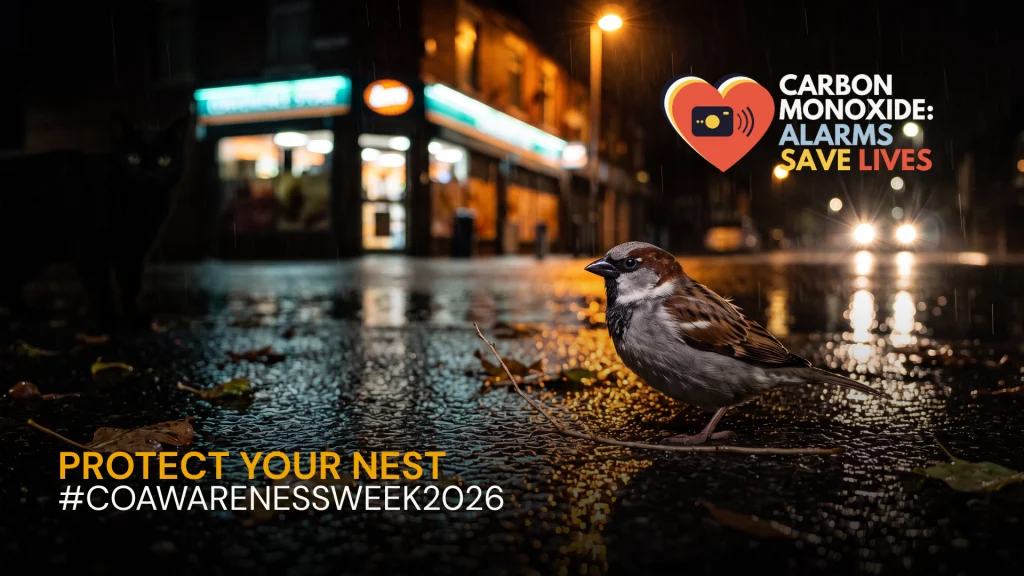
This Carbon Monoxide Awareness Week (23–29 November 2026), we’re supporting the national ‘How safe is your nest?’ campaign.
It’s a simple reminder that home should be the safest place for you and the people you love.
Carbon monoxide (CO) is a poisonous gas you can’t see, smell or taste. It’s produced when fuels such as gas, oil, coal and wood don’t burn properly. This can be caused by gas appliances that are faulty, poorly maintained or badly ventilated.
As the weather turns colder and we spend more time indoors with the heating on, now is the perfect time to check your home is protected and ensure you have a working carbon monoxide alarm.
Look out for warning signs from your appliances
It’s important to look for clues. Your appliances can give you potential tell-tale signs that something isn’t right.
Be on the lookout for:
- lazy yellow or orange flames on gas appliances, instead of a crisp blue flame
- soot, or brown or black staining, on or around appliances
- a pilot light that keeps going out
- more condensation than usual on windows in the room where the appliance is
- a boiler, fire or cooker that isn’t working as well as it should.
If you notice any of these signs, stop using the appliance and have it checked by a Gas Safe registered engineer. If you think carbon monoxide may be present, get everyone outside into the fresh air and call the National Gas Emergency Service straight away on 0800 111 999.
Why servicing matters
Regular servicing is one of the simplest ways to protect your nest. A Gas Safe registered engineer can help spot problems early, before they become dangerous, and make sure your appliances are working safely and efficiently.
- Have your gas appliances, including your boiler, cooker and gas fire, serviced every year by a Gas Safe registered engineer.
- If you rent your home, your landlord must arrange an annual gas safety check.
- Keep vents, air bricks and flues clear so appliances can breathe.
- Have chimneys swept regularly if you use an open fire or wood burner.
- Never use a gas cooker or oven to heat your home.
To find a registered engineer near you, visit the Gas Safe Register website or call 0800 408 5500.
Do you know the symptoms?
It’s important to be vigilant. The symptoms of carbon monoxide poisoning can be mistaken for flu, food poisoning or tiredness. Children and pregnant women can be at greater risk too. The symptoms include:
- headaches
- dizziness
- nausea
- breathlessness
- collapse
- loss of consciousness
Be extra alert if your symptoms ease when you’re away from home and return when you come back, or if other people in your home, including pets, feel unwell at the same time.
What to do if you suspect carbon monoxide
- Get everyone, including pets, out into fresh air straight away.
- Open doors and windows as you leave and turn off appliances if it’s safe to do so.
- Call the National Gas Emergency Service on 0800 111 999. Lines are open 24 hours a day, seven days a week.
- If you feel unwell seek medical help. Contact your GP or NHS 111 for advice and tell them you think carbon monoxide may be the cause. If someone collapses or is unconscious, call 999.
- Don’t go back inside or use the appliance again until a qualified Gas Safe registered engineer has checked it and confirmed it’s safe for use.
Carbon monoxide alarms save lives
Because you can’t see, smell or taste carbon monoxide, a working audible CO alarm is the only way to know it’s there.
It’s piece of mind for you and your family. They help give you an early warning, so you have time to get out and get help.
Alarms are widely available from DIY stores, supermarkets and online. Choose one that meets British Standard EN 50291 and carries the British Kitemark. Accessible CO alarms are also available for people with a hearing impairment.
Make sure you install it correctly
An alarm can only protect you if it’s in the right place. Always install your CO alarm in line with the manufacturer’s instructions, which explain where to position it, including how high and how far from appliances.
Depending on how many appliances you have and their locations, you may need more than one. It’s important to fit an alarm in every room with a fuel-burning appliance, such as a boiler, gas fire or wood burner.
Don’t forget to test it
Testing your carbon monoxide alarm is crucial. If it helps set a reminder in your diary, phone or any other device you may have in your home that could prompt you.
- Press the test button regularly, at least once a month, to check the alarm is working.
- If battery operated replace the batteries when needed and never remove them to use elsewhere.
- Check the expiry date and replace your alarm when it reaches the end of its life, following the manufacturer’s guidance.
- Never ignore an alarm that’s sounding. Treat it as an emergency and follow the steps outlined above.
Protect your nest
A few simple steps can make a big difference. Get your appliances serviced, install and test a CO alarm, and know the signs and symptoms. By being prepared today you can be safer tomorrow.
Please share these tips with family, friends and neighbours, especially anyone who may need a little extra support. For more free gas, carbon monoxide and energy saving advice, check out our ‘Prepared today. Safer tomorrow.’ page.
Find out more about the campaign and how you can get involved at coalarmssavelives.com