



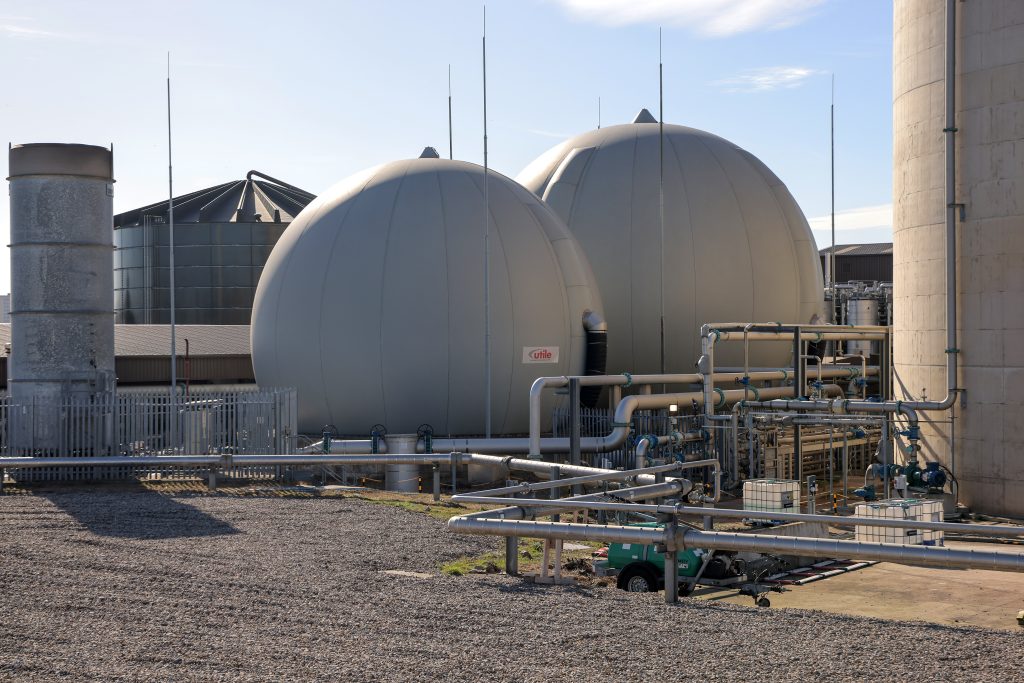
Every day, around one million people across Tyneside flush their toilets without a second thought. However, what disappears down the drain begins an unexpected journey.
At Northumbrian Water’s treatment works in Howdon, Wallsend, sewage sludge is transformed into biomethane, a renewable gas that is helping to heat local homes and businesses.
Working together, Northumbrian Water and Northern Gas Networks (NGN) are turning waste into a valuable energy source. As a result, green gas produced on Tyneside is injected directly into the local gas network and used by customers across the region.
The site is one of 20 biomethane facilities connected to NGN’s network. Together, these sites generate 0.71 terawatt-hours of renewable energy each year. This is enough biomethane to heat around 59,000 homes.
Looking ahead, NGN plans to double the amount of energy produced from biomethane over the next five years. This forms part of its commitment to delivering a fairer, greener future for the North East.
What is biomethane?
Biomethane is a clean, renewable gas produced from organic materials, including household and green waste.
The process starts with anaerobic digestion, where naturally occurring microorganisms break down organic matter in the absence of oxygen. During this process, biogas is produced.
The gas can be used to generate electricity and heat. However, it can also be cleaned and upgraded to create biomethane. Once upgraded, the gas can be injected directly into the existing gas network.
This makes biomethane an efficient and practical renewable energy source. Importantly, it can help reduce carbon emissions while making use of infrastructure already in place.
How waste becomes green gas
At the Howdon site, sewage sludge undergoes several stages before it becomes biomethane.
First, the sludge is loaded into pressurised reactors and heated to 165°C. This breaks down the biological cell structure and releases more nutrients for energy conversion. Next, the material is depressurised and cooled. It is then transferred into large digesters where bacteria begin breaking down the waste.
As the bacteria digest the material, methane-rich biogas is released. This gas is collected and processed before ultimately being upgraded to biomethane.
The final stage is where NGN’s infrastructure plays a vital role. Once ready, the biomethane is injected into the gas network, allowing it to be used in homes and businesses across the region.
Very little material is left behind. The remaining by-product, known as “cake”, is converted into agricultural fertiliser, ensuring even more value is recovered from the process.
A local partnership delivering renewable energy
Although much of the activity happens behind the scenes, the partnership between Northumbrian Water and NGN is helping to demonstrate the potential of biomethane in the UK’s energy future.
Dan Laverick, Asset Integrity Engineer at NGN, said: “Our physical presence on this site is small, but without our assets, the plant would not be able to complete the final stage of its process, which is injecting green gas into our grid.”
For Northumbrian Water, the project builds on more than a decade of innovation in renewable energy generation.
Lee Curry, Treatment Works Manager at Northumbrian Water, said: “This long-standing project is a great example of how we’re turning something customers flush away every day into a valuable resource.
“By working with Northern Gas Networks, we’re transforming sewage sludge from communities on Tyneside into green gas that goes straight back into heating local homes and businesses.
“It’s a powerful demonstration of the circular economy in action, reducing waste, cutting carbon and helping build a greener energy future for our region.”
The future of biomethane
As the UK works towards net zero, biomethane is expected to play an increasingly important role in reducing emissions and strengthening energy security.
James Earl, CEO of Future Energy Networks, said:
“Biomethane is a home-grown green gas which can support both decarbonisation and energy security, with no impact on customers.”
Projects such as the one at Howdon show how local waste can be transformed into local energy. In turn, this supports communities, reduces carbon emissions and helps build a more sustainable energy system.
To find out more about biomethane and NGN’s plans for the future, visit the NGN biomethane website.